

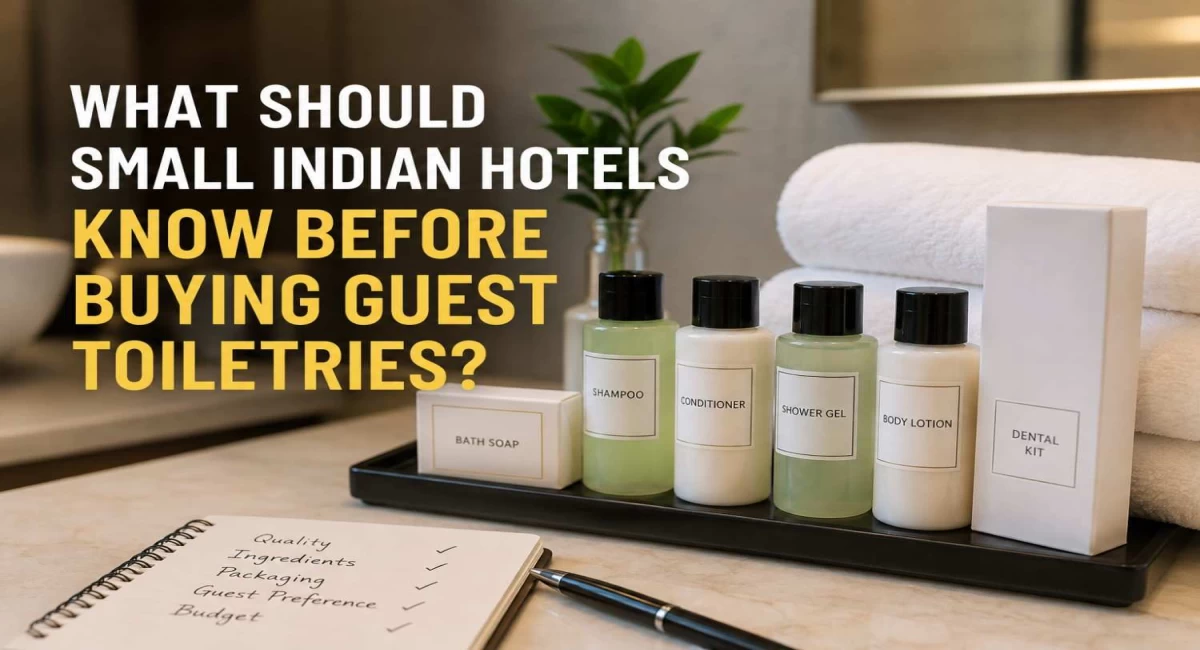
WHAT SHOULD SMALL INDIAN HOTELS KNOW BEFORE BUYING GUEST TOILETRIES?
Before You Start
- Choose toiletries based on your hotel's guest profile.
- Test products before placing large orders.
- Compare quality, price, packaging, and supplier reliability.
- Track monthly usage to control unnecessary purchases.
- Store toiletries in clean and suitable conditions.
- Select packaging that suits housekeeping needs.
- Review your toiletry requirements regularly.
Are you running a small hotel and unsure which guest toiletries to buy? Choosing hotel toiletries from hotel guest amenities suppliers involves more than checking the price.
You need to consider guest needs, product quality, packaging, hygiene, storage, and your hotel's budget.
The right guest toiletries can improve the stay without putting unnecessary pressure on operating costs. Small hotels should choose practical products that suit their guests and room category.
What Are Guest Toiletries in Hotels?
They are personal-care products that hotels provide for guests during their stay. These products usually cover basic bathing and hygiene needs.
Common hotel toiletries include:
- Shampoo
- Conditioner
- Bath soap
- Body wash
- Hand wash
- Body lotion
- Dental kits
- Shaving kits
- Shower caps
- Combs
- Sanitary bags
Which Guest Toiletries Should Small Hotels Buy?
They should start with essential products that suit their room type and guest profile. Basic toiletries often include soap, shampoo, dental kits, and shower caps.
The selection can change based on the hotel's location and customer base. A budget hotel may need fewer items than a boutique or business hotel.
Before placing an order, consider:
- Type of guests
- Average length of stay
- Room category
- Hotel location
- Seasonal demand
- Daily room occupancy
- Available storage space
- Housekeeping routine
How Should Hotels Choose the Right Toiletry Quality?
Hotel toiletries should offer acceptable quality without creating unnecessary costs. Guests expect products to look clean, fresh, and suitable for regular use.
Check the product before placing a bulk order. Look at its packaging, fragrance, texture, ingredients, shelf life, and overall presentation.
Small hotels should also ask suppliers for product samples. A sample lets the hotel check the actual product before making a larger purchase.
Do not judge toiletries only by their price per piece. A cheaper product may create problems if guests dislike its quality or packaging.
Should Small Hotels Choose Sachets, Bottles, or Dispensers?
The packaging format depends on the hotel's budget, housekeeping process, and guest expectations.
Small bottles and sachets can work well for short stays. They also give guests an individual product for personal use.
Wall-mounted dispensers can reduce packaging waste and simplify replenishment. They may suit hotels that want a practical setup for shampoo, conditioner, or body wash.
Before choosing a format, consider:
- Product usage per room
- Refill frequency
- Housekeeping time
- Storage requirements
- Guest expectations
- Packaging waste
- Bathroom space
Why Is Packaging Important for Hotel Toiletries?
Packaging affects how guests view the hotel's attention to detail. Clean and well-presented toiletries create a better impression than damaged or poorly labelled products.
The packaging should also protect the product from contamination and leakage. Bottles, sachets, and other packs should remain sealed until use.
Hotels should check labels carefully. Product information should remain clear and readable. Hotels should also follow applicable packaging and labelling requirements.
How Can Small Hotels Control Toiletry Costs?
Small hotels can control costs by tracking actual usage. They should avoid ordering large quantities simply because bulk prices look attractive.
Start by calculating the average monthly requirement. Then keep a reasonable buffer for busy periods.
Hotels can also compare suppliers based on:
- Product price
- Minimum order quantity
- Delivery time
- Packaging options
- Product quality
- Shelf life
- Replacement policy
- Custom branding options
Should Hotels Buy Branded or Private-Label Toiletries?
Both options can work for small hotels. The better choice depends on the hotel's positioning and budget.
Branded toiletries can give guests a familiar name. Private-label products can give hotels more control over packaging and branding.
Hotels considering private-label products should first check samples and supplier capabilities.
A small hotel should avoid committing to a large private-label order before testing guest response.
What Should Hotels Check Before Buying in Bulk?
Always check the supplier and product before placing a large order. Small hotels can reduce purchasing problems by following a simple checking process.
- Request product samples.
- Check packaging quality.
- Review product details and labels.
- Check manufacturing and expiry information.
- Ask about minimum order quantities.
- Confirm delivery timelines.
- Discuss storage requirements.
- Compare prices from suitable suppliers.
- Test products with a small batch.
- Place the larger order after approval.
How Should Hotels Store Guest Toiletries?
Proper storage protects toiletries from damage and contamination. Hotels should keep products in a clean, dry, and suitable storage area.
Avoid placing toiletries directly on damp floors. Keep cartons away from excessive heat and moisture.
What Common Mistakes Should Small Hotels Avoid?
Many purchasing problems happen because hotels focus only on price. They may order too much stock or select products without testing them first.
Common mistakes include:
- Buying large quantities without samples
- Choosing poor-quality products to save money
- Ignoring guest preferences
- Ordering unsuitable packaging
- Keeping excessive stock
- Ignoring storage conditions
- Failing to track monthly usage
- Changing suppliers too often
- Ignoring product and packaging details
How Can Guest Toiletries Improve the Hotel Stay?
They cover basic needs during a hotel stay. Clean, useful, and well-presented products can also show that the hotel pays attention to guest comfort.
Small hotels do not need expensive toiletries to create a good impression. They need products that match their guests and room standards.
What Should Small Hotels Keep in Mind Before Buying?
Small hotels should first understand what their guests need. They should then compare product quality, packaging, pricing, storage, and supplier reliability.
A good purchase decision from hotel shampoo suppliers should support both guests and daily housekeeping work.
The best guest toiletries are not always the most expensive ones. They are the products that provide suitable quality, practical use, and reliable supply at a sensible cost.
Let’s Summarize
Small Indian hotels should choose guest toiletries based on guest needs, room type, quality, packaging, usage, and budget. Hotels should test samples before bulk orders and track monthly consumption. They should also check supplier reliability and storage needs.
What toiletries should a small hotel provide to guests?
Should small hotels buy expensive guest toiletries?
Is it better to buy hotel toiletries in bulk?
How can a hotel choose the best toiletry supplier in India?
Should hotels use bottles, sachets, or toiletry dispensers?


We are leading manufacturing unit for all types of hotel toiletries and amenities like shampoo, shop, body wash, moisturizer, conditioner, dental kit, shaving kit, comb, vanity kit, loofah, slippers etc.
Contact Us
 SF-1, Pearl's Omaxe, Netaji Subhash Place, Pitam Pura
Delhi- 110034, India.
 Phone: +91 8929557749, 9354125442, 9891912265, 8368657026
 Email: sales2@120spice.com
Email: sales2@oldtreebrand.com
Email: sales@120spice.com
 Working Hours: Mon-Sat: 10:00am. to 07:00pm


